
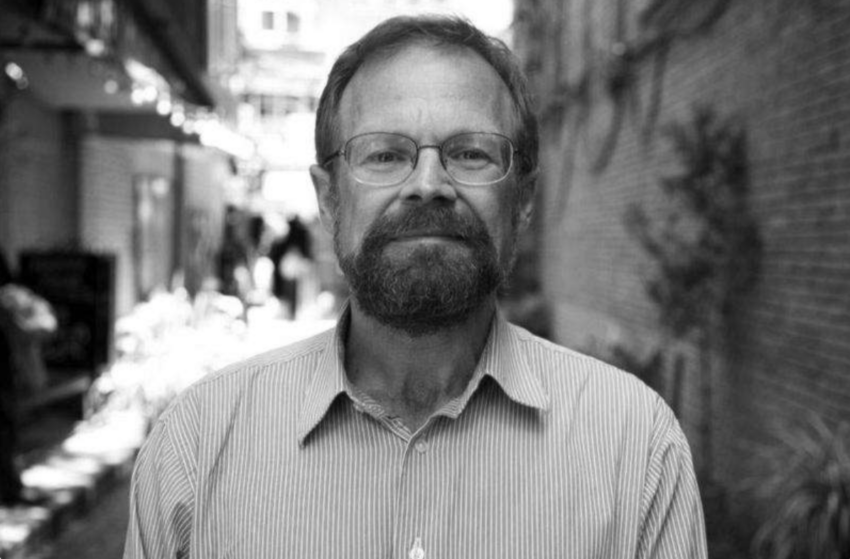
Three poems by Christopher Merrill
A Treatise on Poetics
Variations on a theme by Czesław Miłosz
Not ramrod certainty but delicate,
Persistent excavation of beliefs
And truths disguised as forms of shapeliness,
Arranging vowels, consonants, and stresses
In lines more musical than politic.
Not dumping hatchlings from a turboprop
Into a mountain lake, with wildfires blazing
On the ridges all around the water, but sinking
Or swimming syllable by syllable,
Inhaling smoke and then exhaling light.
Not this, not this, not this, poets may write.
But you and I will sing this song forever.
_____
No fire alarm sounded until the flames
Reached the top floor, and then it was too late
To save the family and their menagerie
Of pets, domestic, feral, and beloved.
Nor was there any mention in the news
Of violations their insurance agent
Recorded in his annual reports.
The house inspector, the bank manager,
The neighbors—all insisted on maintaining
Silence, despite the evidence of arson
Meticulously gathered by the town
Crier. Who could imagine such a crime?
_____
Not to replace our vestments, liturgy,
And canon law but to expand our view
Of covenant theology to build
A new relationship to the divine,
Figured in images derived from nature—
The sacred snowy egret, great blue heron,
And common crow; the holy baobab
And burning bush; the cobra in a basket
Belonging to the wandering snake charmer,
And all the silks and spices in the market
The health inspector closed down for the week.
We must return once more to the beginning.
__________
Lunar Eclipse
Dates ripening in the palm tree planted in the courtyard, between the vines of a passion flower and a mango tree in which a woodpecker was calling, calling.
The smoke and sirens seemed to spring from an account of the fire and mudslide in Montecito, which I had read before turning in that night, and upon waking in the dark I thought I was still reading until I drew back the curtains and saw flames rising thirty or more feet into the sky.
If the rainstorm that triggered the mudslide in Montecito had started before the fire that destroyed the chaparral, the root system of that community of plants would have slowed the mudflow, sparing houses, roads, and all the dead and missing, including a three-year-old child.
The Casa Dracula in Todos Santos, where we met each morning in the courtyard to discuss poetry, had been on the market for so long the owners would have entertained almost any offer.
While north of the border the President prepared to deliver his first State of the Union address to both houses of Congress—a prospect that filled me with dread.
What would he say about the wall he promised to build along the border, with Mexican funding?
A neighbor photographed the license plate of the truck in which the drunken arsonists made their escape to set more fires that night—ten in all.
They would not be prosecuted, lamented the hotelier, who maintained her fire watch until dawn.
She had invested heavily in the beds in her guest rooms—which is why I fell back to sleep, even as the fire approached the special needs school next door.
Was the prospect of a lunar eclipse, combined with a blood and a blue moon, what inspired the apprentices to question the role of poetry in the face of political disaster?
The answers I proposed—Akhmatova’s witness, Heaney’s discernment, Szymborska’s cunning—fell on deaf ears, or so I imagined in my refusal to see the truth apparent to everyone but me.
Which was that fire had consumed my thinking for so long that I did not feel its flames, and what went up in smoke, obscuring the sky during the lunar eclipse, was everything I loved.
__________
Poem Left on the Wall of Names
Variation on a theme by Ross Gay
My heart for you is the last bunch of green plantains in a hut crowded with tins of charcoal made from eucalyptus and bags of sugarcane, when no one has the money to buy anything.
The pistil grinding up cassava leaves for the pancakes served after church on Easter Sunday.
The last note sung by the gospel choir recruited for Heart’s cover version of “Stairway to Heaven” performed at the Kennedy Center, with Led Zeppelin watching from the balcony.
The slick marble staircase below the saltwater pool at a hotel named Heaven, where a woman sips a Pina Colada, murmuring, I am not a moon, a panda, or a path through the mountains.
A passport thick with visas from countries of strategic interest to policy makers in Washington—Mozambique, Tunisia, Uzbekistan…
The crack in the tennis court, which tripped up the last seed on championship point, averting the greatest upset in the history of the tournament.
The rainbow trout that swallowed a fisherman’s favorite dry fly—and then the metallic taste in the air after a lightning strike knocked out the power.
A twelve-point buck frozen in the headlights of a speeding car driven by a thief who thinks he has eluded the police; also the sound of tires squealing on a winding mountain road.
The venom collected from a king cobra by a volunteer, whose inattentiveness will seal his fate.
The asthmatic in a chokehold, gasping for all the world to see: I can’t breathe.
__________
Christopher Merrill has published six collections of poetry, including Watch Fire, for which he received the Lavan Younger Poets Award from the Academy of American Poets; many edited volumes and books of translations; and five works of nonfiction, among them, Only the Nails Remain: Scenes from the Balkan Wars and Things of the Hidden God: Journey to the Holy Mountain. His latest book are, On the Road to Lviv, and The Tree of the Doves: Ceremony, Expedition, War, chronicles travels in Malaysia, China and Mongolia, and the Middle East. His writings have been translated into twenty-five languages; his journalism appears widely; his honors include a Chevalier from the French government in the Order of Arts and Letters. As director of the International Writing Program at the University of Iowa, Merrill conducted cultural diplomacy missions to over forty countries, served on the U.S. National Commission for UNESCO, and in April 2012 President Obama appointed him to the National Council on the Humanities.
