
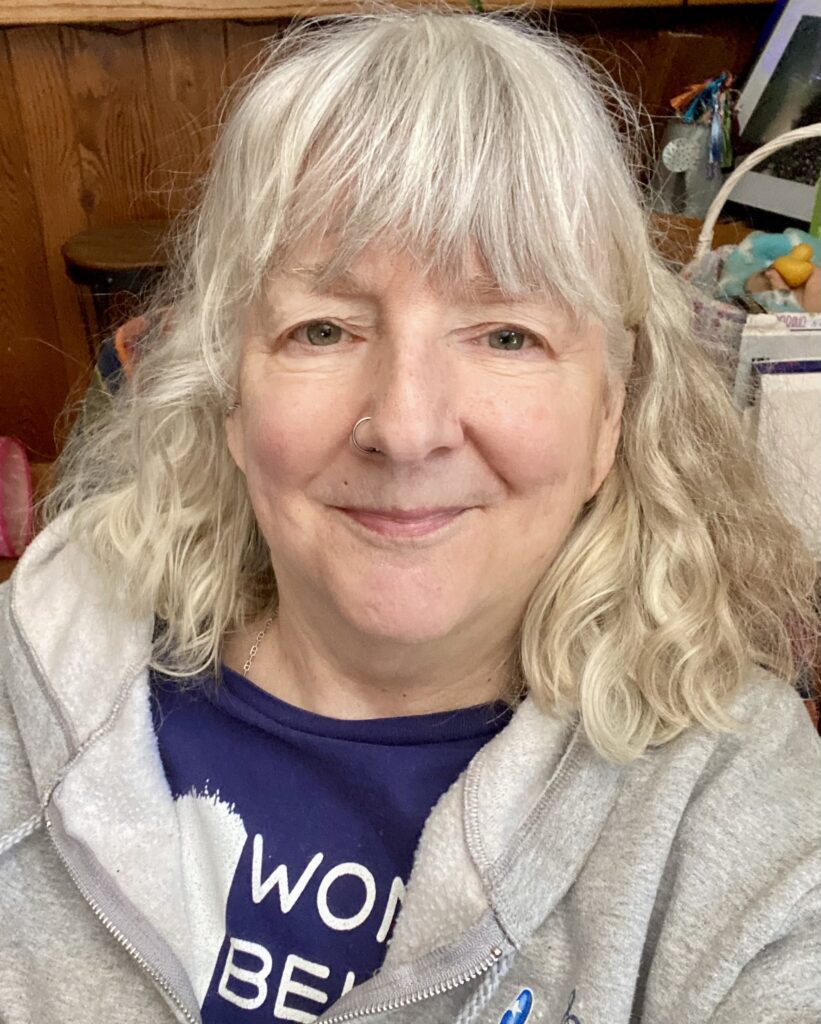
Where we seek a haven, we may find horror. Haven, the slow-boil novella by respected poet and author Rachael Ikins, explores universal themes of loss, change, and our search for belonging. Ikins’s ability to subsume our deepest fears and channel them through the natural world weaves a tale just believable enough to scare us silly. Her transition from poet to fiction writer and back again marks a literary journey worthy of reflection.
Rachael Ikins’s works commit fully to whatever genre they inhabit. Her flexibility as a writer offers a lesson for the novice and a reminder to all of us that we can transcend genres. In her recent collection Haven, Ikins has shifted into the horror genre while retaining the passion and precision of her poetic sensibility, especially when writing about trauma. In our Q&A, we explore Ikins’s staying power and determining light.
CLD: Rachael. I was really intrigued when I first read Haven because it surprised me that you chose a horror genre. There’s something very freeing about writing in a horror genre, especially when it’s not about blood-and-guts and more of a slow-boil sense of unease and fear. Is this why the genre is so beloved? Because so many of us can relate to that feeling?
RZI: Stephen King mentioned something to the effect that daily life is comprised of many little horrors and certainly the time we live in is especially monstrous. Horror gives us escape from our own fears and kind of transfers them to the story. I know a bunch of people who “watch true crime serial killers” to escape politics. I made a conscious effort to include multiple little daily life horrors in Haven.
CLD: When you objectively examine your body of work (thus far) and notice the kaleidoscopic element of your writing in its variety of genres, would you say this says a lot about you personally? That you’re able to dive into a multitude of genres because at the end of the day, you’re a story teller who isn’t held back by the restrictions of writing in a singular genre?
RZI: It’s funny but when I threw myself into visual art the people I studied with and sought advice from were always trying to get me to pick one medium and stick with it. I couldn’t. I wanted to try all sorts. My former poetry instructor during Covid says of me “She’ll try anything!!” Why restrict yourself when there is so much out there? It’s just part of me to try new things because you never know.
CLD: George Orwell famously said “When I sit down to write a book, I do not say to myself, ‘I am going to produce a work of art.’ I write it because there is some lie that I want to expose, some fact to which I want to draw attention, and my initial concern is to get a hearing.” Which of all the genres feels most like ‘you’ and why? Do you have a motive in writing to expose a lie?
RZI: I identify first as a poet. I started writing poetry as a child of 7 so it is how I define myself.
I like to expose the truth in general and poetry is definitely a truth sayer. As a person I just don’t like bullshitters. There is something in me that requires exposing the lie.
CLD: I love that you don’t take prisoners of pretentious or insincere people. Have you always been a storyteller? When did you know you wanted to devote your life to writing? Ernest Hemingway was quoted as saying: “We are all apprentices in a craft where no one ever becomes a master.” For you, has it been a hard road? Many writers have the advantage of being independently wealthy. You’ve had to really work hard to earn your way, doing whatever it takes to keep going, but were there times you wondered why you did it? What kept you going?
RZI: When my teacher told me, as Mrs. Gomez tells Jake in Haven that I definitely was a poet when she read my first poems that was when.
Yes, sometimes I wonder why I do it, but there have been a few turning points where the only thing that kept me going was poetry. When it was the only thing I had that made me feel good about me. I hung on tight because that was all I had. I have had to be super creative to pay for workshops and fellowships and find ways to educate myself.
CLD: Have you seen the publishing world, in specific the indie publishing world, change or shift in the last few years in any way?
RZI: I think it’s become more accepted. There is more pushback against the so-called gate keepers. It always bothers me that no matter area in life at some point there ends up a hierarchy and labels. Labels are so limiting.
CLD: Making people believe the unbelievable is no trick; it’s work. … Belief and reader absorption come in the details: An overturned tricycle in the gutter of an abandoned neighborhood can stand for everything.” Is a quote from Stephen King, who in many ways, is the most well-known writer of horror. Would you agree with him here? How do you go between the two, seemingly diametrically opposite genres so fluidly? I say this knowing you are working on a book for children alongside bringing out Haven.
RZI: Yes, I agree with him. My new young reader book from ClareSongbirds Publishing House is the second in a series the first A Piglet for David 2023 and now The Magic Blankie (which coincidentally finally uses my college degree in Child and Family Studies).
The devil is in the details and leaving room for the reader’s mind to participate matters.
Children live on the edge of terror, right? The monster under the bed, in the closet. Children believe in magic and their minds are not yet cluttered with inhibiting junk. I think it’s easy to go between genres. Grimm’s Fairytales are pretty scary.
I don’t dislike having a monster character, but for example when I was reading Stephen King’s It I felt almost let down when we finally “saw” what the monster was. So my decisions for Haven were very much about making the fantastical relatable and believable.
CLD: Sometimes what you can’t see, is far scarier than what you can. How do you grow ‘you’ as a brand? What do you feel has worked, versus what has not worked? And how is the transition into increasingly more technology-based promoting, such as Instagram and live-reels and Zoom book launches? Do you find you thrive more in a personal, tactile setting, or are you equally comfortable online?
RZI: I grew to really enjoy Zoom because that takes care I heat waves, blizzards and downpours and driving far as a woman alone at night. I used to do a lot of social media platforms and blogs but over the years I found it was taking too much time away from the writing itself. Money is a factor that helps people market themselves. A poet’s budget doesn’t particularly lend itself to extensive spending. I think traditional publishing has changed a lot too in the meantime. Many famous authors are out there same as everyone else marketing their own books, lining up their own events and so on.
CLD: How did Haven come to be written? What was the zeitgeist behind the story to inspire you to put this together?
RZI: I was reading Jacqueline Sheehan’s Lost and Found which is a thriller that involves a woman and a dog she encounters. Magical realism. I loved Stephen King from the get-go and I was simultaneously writing the fantasy stories that became my book Totems and the beginning ideas of Haven in the early 2000s. Totems has some very scary scenes and deaths.
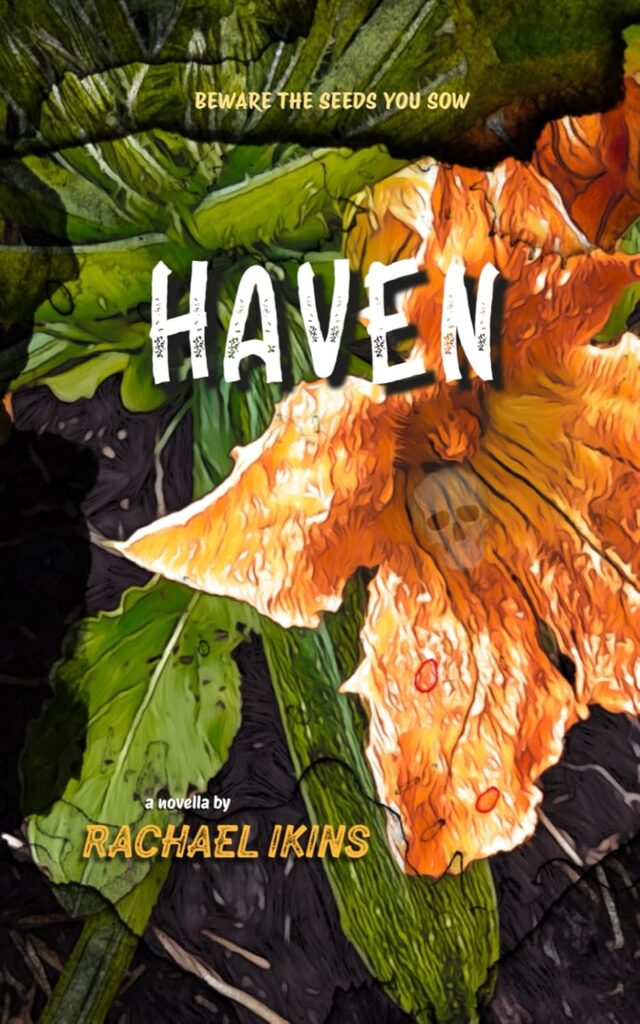
I wanted to try writing a novel. In a genre that people love. I had a deal with myself that I had “one best seller in me” and that would satisfy the restlessness or whatever that keeps driving me. I also thought a thriller would be more marketable than poetry. It has been my dream to support myself in part with the writing. I have taken on positions with small publishers editing, copyediting, contest judging and consulting. That is a decent income source if sporadic. Several of my clients currently have books accepted for publication so that makes me happy.
CLD: Haven had a lot of magical realism in it, and that’s one of my favorite aspects of the novella. You’re right of course, thrillers do tend to be better selling. Allegra Goodman’s quote: “Know your literary tradition, savor it, steal from it, but when you sit down to write, forget about worshiping greatness and fetishizing masterpieces.” Is one of my favorites and I really believe for many of us, sticking to what you can do best, is how you produce quality work. Would you agree with her or do you see it differently? Or do you think it’s important to challenge yourself?
RZI: I started out in the confessional school, loved Anne Sexton but in more recent years have embraced my love of surrealism. I think both things are parts of the same whole. You need to challenge yourself and you need to hone what works for you. Every person’s method is unique. Some people write every day for a certain amount of time. I usually write new in the early mornings. But not necessarily daily. As time has passed my methods have evolved. I’m more patient.
CLD: Editing Woman with Three Elbows, I really adored the surrealist nature of your writing in that book, and admired the depths of honesty and self-revelation you engaged in. You’ve won a few prizes through the quality and consistent quality of your writing. Do you feel that others pick up what you are putting down, or do you feel it’s a constant battle to stay relevant in an ever-shifting society where the attention-span on any one book or author, is very short lived?
RZI: Oh yes. After I released Broken Spoons about losing my dog Sassie and how you deal with terminal illness and death of loved ones (Raw Earth Ink 2024) people who had lost humans as well as others who lost animal family members really let me know they found a lot of comfort in that book.
I’ve won quite a lot of prizes, most for individual pieces and most for poetry and visual art but also a book prize, so far. I don’t know how people keep up. Social media, friends and family who are technologically savvy. Going a little crazy with the feeling that there are yet more hoops to jump through can be overwhelming at times. Writing is not for the faint of heart.
I have gotten to a place where I do what feels most comfortable to me. My favorite is connecting with what I call “wild readers.” People who aren’t other authors or poets who are all in the same boat and often broke ish but those strangers who might walk into a bookstore to find something good to read. And it has happened. People I don’t know have come up to me to say my book, whichever one at the time, made a huge difference to them. That is the best.
CLD: Do you finally ‘see’ yourself as a writer, or do you still struggle with imposter syndrome and its myriad ways of denigrating the vast achievements you’ve made? Do you think the writer’s imagination is the lynchpin of their success or is it a marriage with discipline and showing up to do the work? When do we ‘become’ a writer?
RZI: I have felt for a long time that I was born a poet. It was already in me. When I was in college my best friend said “You’re a writer.” I said “How do you know?” She replied “because you’re always doing it.”
Novelist Jane Smiley suggested eavesdropping when out and about and jotting down things that catch the ear and going from there. I like that advice, it works. Write what you know. Be honest.
I suffer with imposter syndrome periodically. I can look at my brand new book or collection and find everything wrong with it. Friends tease me as each new book or honor accumulates with “NOW do you feel successful?”
CLD: Do you look at how others do it, and if you see someone you think is doing it ‘right’ emulate that model to some degree, or gain traction and hope from their apparent success?
RZI: I have been lucky enough to study with some of my role models like Marge Piercy and Patricia Smith. In the end as Oscar Wilde said “Be yourself. Everyone else is taken.” You may start out modeling your writing after someone you respect but you do eventually speak with your own voice.
During Covid I studied with Craig Czury and he introduced us to many many lesser known but famous Eastern European poets and translators and I am especially fond of Polish poet Wislawa Szymborska. Translating someone’s work also is a huge thing in poetry. To be true to the poet’s original voice. I marvel at some of the poets I know whose native languages are NOT English but they write poetry in English.
CLD: You bring up a GREAT point. I too marvel at writers who write better in English as a third-or more language, than those for whom English is a first language. Returning to your novella; What do you want the reader to know about Haven that they might not know from reading it?
RZI: I was learning how-to write the genre from reading all the time. My cousin Jennifer Hubbard Brooks who died several summers ago was my number one fan. She read the roughest drafts when I was living in a dilapidated house in the country and was desperate to support myself. Her encouragement kept me trying. She loved the genre and was not a poet/author of any kind.
In Haven we don’t see Sheryl’s or Jake’s poems but we learn about the courage it takes to write truth and the unique power of poetry to convey it.
CLD: Often our greatest champions are outside of the writing-community and their belief in us, is so pure and lasting. Thank you very much Rachael. To purchase Rachael’ latest book, Haven, a novella, please ask your favorite bookstore or go to AMAZON.
_____
Rachael Ikins is a multiple Pushcart nominee and 2018 Independent Book Award winner. She has been a finalist and semi-finalist in the William Faulkner/William Wisdom Writing Competition and the Vinnie Ream Competition (NLAPW) and a 2021 Best of the Net Nominee. She has published 6 chapbooks, as well as full-length collections, fantasy and memoir. Her prize-winning artworks are on book and journal covers worldwide. Rachael lives in a tiny wood with her animal family. They often walk near a small lake. She loves to ride her bike and to garden. Dragons fly by.
Candice Louisa Daquin is an editor and trauma-therapist. Daquin is Senior Editor with Indie Blu(e) Publishing, Editor with Raw Earth Ink and Queer Ink and editor with Life and Legends, Writers Resist and Tint Journal.
