
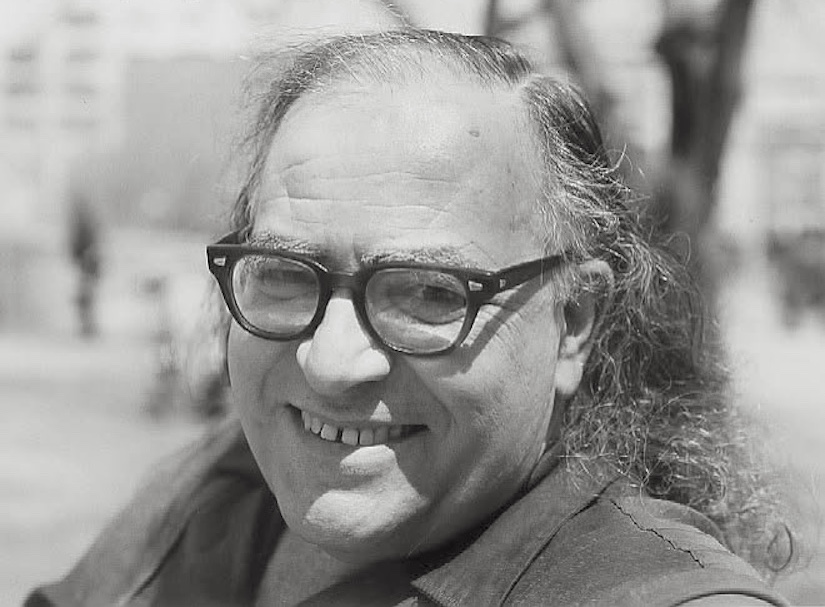
Jack Foley in Conversation with Kalpna Singh-Chitnis
Speech come to those who have no need for anything but air ~ Jack Foley
Once, I asked Jack Foley how he would like the world to remember him. He replied: “As a good poet and as someone who changed people’s minds in certain respects. Someone who said to himself and to others what the statue of Apollo said to Rilke in 1908: Du mußt dein Leben ändern—You must change your life.”
I had the privilege of knowing Jack not only as a poet but also as a friend. Jack and his wife, Adelle Foley, stayed with us as our guests at our home in Irvine, California, when we hosted a literary gathering in his honor featuring his poetry and performance. After Adelle’s passing, my family and I also had the privilege of being Jack’s guests at his home in Oakland, where we stayed for a couple of days. Our conversations during that time gave me the opportunity to know him more, both as a person and through his work. I witnessed him live up to his words until his passing in 2025, leaving behind a legacy as a poet, critic, performer, radio host, and chronicler of California literary life. His awards and honors included a Lifetime Achievement Award from the Berkeley Poetry Festival in 2010, when June 5 was officially designated Jack Foley Day in Berkeley, California, the Albert Nelson Marquis Lifetime Achievement Award in 2018 and KM Anthru International Literary Award.
In this conversation, Jack reflects on poetry, performance, literary influence, the academy, literary history translation and the many forms a creative life may take. He also reflects on identity, consciousness, love, grief, aging, mortality, race, cultural diversity, religion, compassion, social power, and international literary exchange.
The interview was conducted before his passing in 2025 and has been edited for length, clarity, and publication style. Published on the occasion of what would have been Jack’s 86th birthday on August 9, this interview is also my tribute to him. Jack was a longtime friend of Life and Legends and a generous supporter of Silent River and the literary and humanitarian causes it supports.
KSC: Who is Jack Foley to you?
JF: I think that “Jack Foley” is more “what” than “who.” I have often observed that the term “individual” goes back to a Latin root: individuus, not divided. I have no problem with the term if you mean it in a political sense: the rights of the individual are everywhere to be respected. But if I think of psyche, of what is going on in consciousness, I am hardly “not divided.” I am as divided as I can be. I think of “mind” as a field of multiplicities, various modes and activities, many predicated on what I am doing at a particular moment. When I am speaking to an authority figure, I manifest one set of possibilities. When I am speaking to a child, I manifest another. Behind what we call “I” is a field of multiple awarenesses, some of which are fully consciousness, some of which are not. A friend of mine used to say to his girlfriend, “We love you.” I feel something like that. I present “myself” in different ways to different people and in different situations. I don’t think of myself as a unity, as an “I” or as a “self,” a unified entity. “I” is only a front man for all these activities, and it changes depending on what “I” encounter in the world, in books, in films, in music, in ideation, etc.
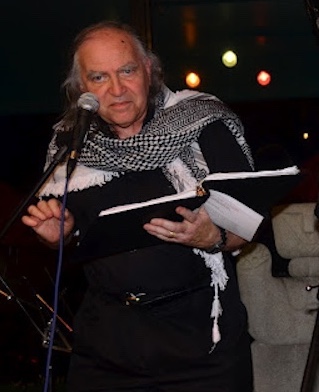
KSC: You are a writer, poet, artist, performer, editor, radio personality, father, husband, friend, and more. What is the commonality among the different roles you play? Which role has been more demanding and challenging for you and why?
JF: As my answer to the first question suggests, I don’t think there is or needs to be a lot of commonality among the different roles I play. Aspects of consciousness appropriate to these various activities appear when I am participating in them. These various aspects may illuminate one another––a drawing might illuminate a poem, for example, or vice versa––but there is no need for them to be unified, no need for a commonality. They are not in a state of unity but in a state of conversation, and not always even in that. One of the great perceptions of the twentieth century is that some parts of the mind don’t know what other parts of the mind are doing even though all are active. In a famous passage in his Philosophical Investigations, the philosopher Ludwig Wittgenstein, investigating the notion of games, came to the conclusion that he could find common threads in some games but could find no common thread in all. To put it another way, he could find no “essence”:
And the result of this examination is: we see a complicated network of similarities overlapping and criss-crossing: sometimes overall similarities, sometimes similarities of detail.
I can think of no better expression to characterize these similarities than “family resemblances”; for the various resemblances between members of a family: build, features, colour of eyes, gait, temperament, etc. etc. overlap and criss-cross in the same way.—And I shall say: ‘games’ form a family…And we extend our concept…as in spinning a thread we twist fibre on fibre. And the strength of the thread does not reside in the fact that some one fibre runs through its whole length, but in the overlapping of many fibres.
Each role presents difficulties; each role presents satisfactions.
KSC: I have been following your works for nearly a decade now and noticed that you write, almost every day, poetry, commentary, criticism, and more. You have written volumes of literature in almost every genre. What inspires you to write?
JF: I like to think of “inspiration” in its root sense, as a “breathing in.” (“Expiration” is breathing out––supposedly the last gasp of the breath as it leaves the body.) For me, poetry is less something you do to produce a product (a “poem”) than it is a deep way of being in the world, to use Heidegger’s term, Dasein, “Being there.” I believe that it’s mistaken to think in terms of the subject-object split, so that there is an “inside” (consciousness) and an “outside” (world). As Heidegger demonstrates very well, world is not separate from consciousness but always an aspect of consciousness, just as consciousness is always an aspect of world. What we “are” is a constant interchange of inner and outer––again, a kind of conversation but an extremely intense one that is going on all the time, even when we sleep. Poetry is my way of experiencing that conversation. Indeed, writing has given me some of my happiest moments because it has clarified and intensified the relationship of inner and outer. As I write, words constantly move beyond themselves and I am often amazed by the direction they take. I love to write in different forms because different forms express different aspects of the ongoing conversation that is our life. As mind is multiple, so writing, so poetry is multiple. It’s a breathing in of the world and then a breathing out again. In a defining poem that I wrote at the age of forty, I said this:
SPEECH COMES
to those who have no need
for anything
but air.
KSC: What do you try to achieve in your writing?
JF: I have only the vaguest notion of what will happen when I begin a piece. I allow the piece to tell me, to unfold itself. As I say above, words constantly leap beyond themselves, take on new directions as I deal with them. Of course, if I’m writing an article on someone, there are certain restrictions on what I am likely to do. This is also true of when I am writing a poem. (If I’m writing a sonnet, for example, I will have to take the form into consideration.) It seems to me that most people don’t care very much for poetry. They are used to prose and feel comfortable with that. They do not feel comfortable with poetry. It occurred to me that if you announce to them that a POEM is in session (“Through throats where many rivers meet the curlews cry”) they are very likely to flee. What I have been doing recently is to write a poem that is initially deliberately prosy. There will be line breaks and often the line breaks will be important, but the poem won’t be that different from reading prose. It is usually quite close to speech. But this is only a means of seduction. By the end of the poem the “prose” will have turned into something that is recognizably poetry. I think of it as a kind of alchemy. In a poem written to me, Michael McClure was one of the first to notice that there is a tension in my writing—in my consciousness––between my considerable capacity for analysis and my considerable capacity for imagination. The poems I produce (and the prose as well) tend to be balancing acts that accommodate both the analytical and the imaginative. At the same time, they attempt to maintain themselves in a constant openness, to stay in “the spirit of availability before What-Is.” They may well not finally “add up.” But as Diane di Prima put it, “Nothing adds up.”
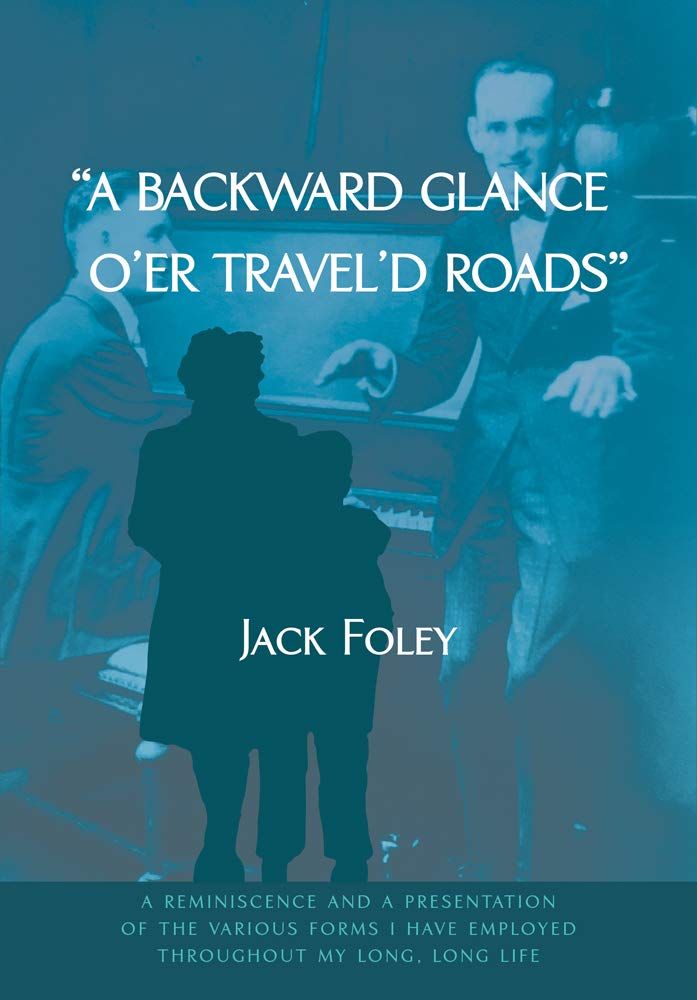
KSC: “A Backward Glance O’er Travel’d Roads” states that you are a “complex, always in motion public intellectual for whom poetry was first, last, and always.” Why poetry?
JF: I don’t think I chose poetry. It was rather the case that poetry chose me. I have often told the story of my “baptism” into poetry. I tell it in “The Light of Evening.” It was rather like Paul on the road to Damascus. I was interested in writing––especially in the “singing prose” of Thomas Wolfe––but I didn’t think I was interested in poetry. A teacher suggested that I read Thomas Gray’s 18th-Century poem, “Elegy Written in a Country Churchyard.” I had no idea why the teacher thought the poem would appeal to me but I hunted it up in the library and took it home. I was entirely blown away by it. The poem seemed to me to be the most beautiful sound I had ever heard. It affected me so immediately and so deeply that I wanted it to have come out of me, not out of Thomas Gray, so I sat down and wrote my own Gray’s “Elegy,” in the same stanzaic form and with the same rhyme scheme as the original. Unlike Gray, I took myself as the subject of my elegy. But its mournful tone and words like “mem’ries” were directly traceable to him. I understood the state of mind named in Gray’s poem to be the state of mind of poetry itself, and in reacting so deeply to it, I understood myself to be a poet.
It was by no means a simple state of mind. It had to do with the enormous power of words not merely to reflect but to create a “reality,” a “mood” which moved me away from the daylight word in which I ordinarily functioned and had identity. Speaking the words aloud let me experience them physically, with my own breath, coming out of my own body. In this situation, mind and body seemed not to be at odds: thought seemed sensuous, sensuality seemed thoughtful. Self and other were joined here too. Thomas Gray was a long-dead poet of the 18th Century. It was his mind that was being expressed in his elegy. Yet his poem seemed to be expressing my own inmost thoughts. It was almost as if Gray’s passionate words allowed him to be reincarnated in my body.
Finally, what did it matter who I was––born in New Jersey, growing up in New York? My powerful reaction to Gray’s words allowed me to recognize not only who he was but who I was: I “was” a poet. And to “be” a poet meant to be transformed, to move away from the person who lived at 58 Prospect Street in Port Chester, New York, and who was 15 years old. Poetry offered me another identity, that of the poet, and, in so doing, it offered me another “home”––that of words. The life I led “at home”––“in my house”––was one thing; the life of words was another.
But a person with two homes can be understood as an exile.
KSC: How did your relationship with the academy and the established literary world develop over the course of your career?
JF: Much of what I did wasn’t understood as “choices” so much as “recognitions”: this is the way things are so this is what I have to do. It wasn’t difficult for me to become a contrarian. I was an only child, a somewhat lonely kid who often had to figure things out for himself. This was sometimes painful but ultimately extremely useful. I remember that the Catholic Church insisted in those days that if you missed Mass, that was a mortal sin. And if you died in a state of mortal sin, you burned in hell forever. My mother never went to Mass so I asked her why. She said, “Oh, I got nothin’ to wear.” I immediately saw that as a disconnect. Did my mother believe that it was a mortal sin not to go to Mass? If so, why did she allow something as trivial as her wardrobe to be an issue? I realized here and in many other instances that the things authorities told me with great assurance were not necessarily believed by everyone: I could make up my own mind about many things.
As for the academy, the quotation is a bit misleading. After high school I had nowhere to go but the academy, and I won scholarship money. (My father was certain I would never go to college: he couldn’t afford it.) I spent a lot of time in the academy, doing well in some respects but slowly coming to the realization that it was not a good fit for me. By 1974 (I was 34) I finally had enough of graduate school. I made a last-ditch effort to write a PhD thesis. I thought that a long paper on Shakespeare’s play, Cymbeline, might be the basis for such a thesis. The only problem with the paper was that it didn’t mention a single critic. I set about to remedy that. In the undergraduate library there was a set of books that had just about everything I needed. Nobody ever touched it. Unfortunately, as I read the critics I found myself getting angry. Cymbeline was not a play anyone seemed to have understood very well. Even people whose work I usually liked had little of interest to say about it. Finally, fighting boredom, I got up and wandered over to the modern poetry section. There I came upon Charles Olson’s Maximus IV V VI. I found the book amazing. I’m not sure I understood it in the usual sense in which one “understands” things, but I understood it. Maximus IV V VI, with its size, its ample white space, its freedom was a revelation. I went back and forth between the critics and Olson until I realized that I was in fact acting out a little psychodrama. Do you want to be this (critic) or do you want to be this (Olson)? The decision was obvious. I left school. I wanted to be Olson. Not a difficult decision.
KSC: How do you define life, success, and happiness? Do you have any regrets?
JF: I don’t define such terms. I allow them to stay in “their uncertainty and their mystery.” One could write a long book on the possible meanings of such terms and still never come to any real understanding of them. I can say that I’m not unhappy with my life and that I feel that I have achieved a modicum of success in my field. On the other hand, I have seen poets more famous than I die and simply vanish: once they’re dead, no one reads them. I wonder if that will happen to me, but there’s not much I can do about it except to collect my work as well as I can and offer it to people. If they decide to read it, I’ll be happy. No regrets. I did what I could with some help from my friends––particularly from my wife, Adelle.
KSC: If you have a chance to do things over again, would you like to do things differently?
JF: No. Things seem to have turned out fairly well for me. I’ve had a chance to do work I love and I have found people who have responded to it. I’ve had people who loved me and whom I loved.
KSC: Your poetry moves between direct, conversational expression and highly experimental forms. How did this range of styles develop?
JF: I think perhaps that what is unique about my poetry is the considerable range of styles that I employ. Someone remarked, “You constantly reinvent yourself.” It’s true that sometimes the poetry is relatively straightforward, but it is by no means always straightforward. I’m interested in juxtaposing modes or perceptions that both go together and remain separate. I’m working on a series called Pairings. Here is an example:
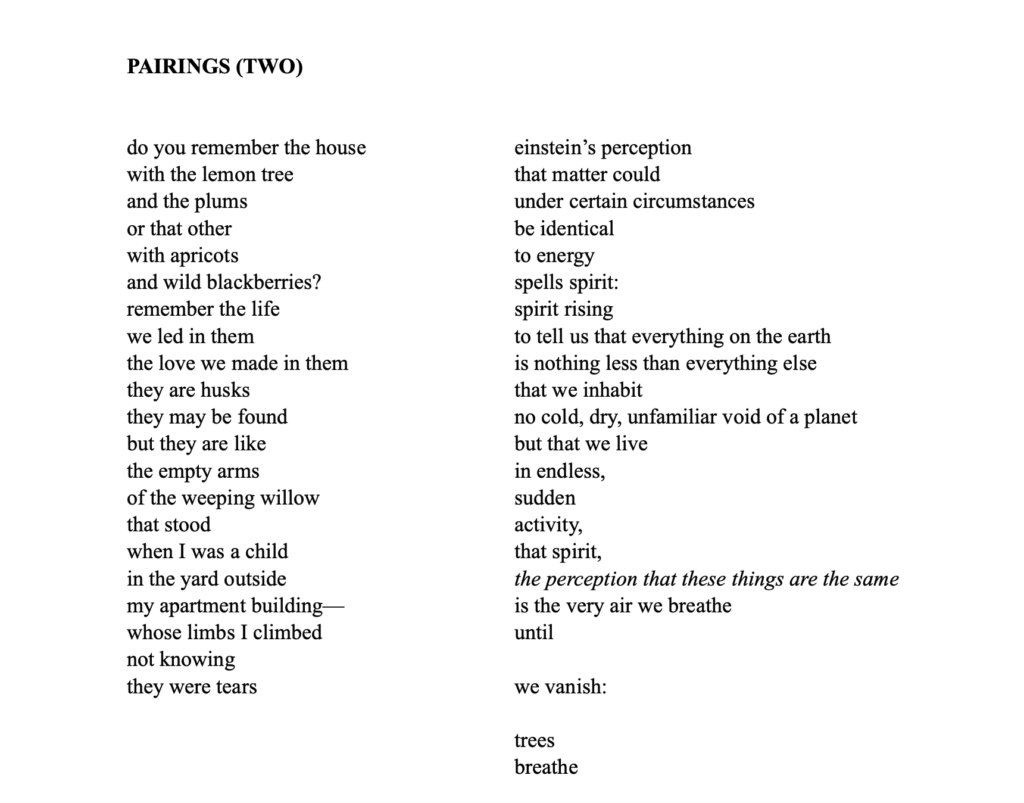
That principle lies behind my choral pieces as well: various voices inhabiting the same space connecting in some ways but not in all. In any case, it’s not so much my business but the business of the poem to determine what it is likely to be. You write down a word or a phrase and suddenly other words and phrases appear. You’re often surprised by what they are. Leslie Scalapino said to me one day, “You can never tell what will come out.” I do feel that it’s harder to hit a moving target––and that I’m a moving target!
KSC: Tell us about your experience of writing your first poem and publishing your first book.
JF: I wrote about writing my first poem in my answer to Question 5. That took place in 1955, when I was fifteen. My first book, Letters/Lights––Words for Adelle, was published thirty-two years later, in 1987. Louis Cuneo was kind enough to ask me for a manuscript for his Mother’s Hen Press. I asked my friend, Larry Eigner, for a blurb and he responded with a delightful preface. At that time, John Curl, H.D. Moe and Mary Rudge were also publishing books in Mother’s Hen Press, and we sometimes gave readings together. My book was in three sections. The first was a sequence called “Letters,” which was dedicated to the sixth Marx Brother, Typo. Question 9 has a sample of that sequence. The second section was a short story, “Lights”––my first published short story. And the third section, the “words for Adelle,” was a choral piece, “Overture: Chorus.” It was the first piece I wrote for performance with Adelle and so it was a kind of “opening,” an overture. It had been written about ten years earlier and had remained unpublished. Adelle and I performed it only once, in the 70s at someone’s birthday party, and not again until our first reading in 1985. I meant the word “chorus” to conjure up both the ancient Greeks and the world of musical comedy and vaudeville, in which my father had participated. The poem electrified both the audience and my discoverer, Iván Argüelles. “Letters” contained the lines,
the page is not the
natural dividing point,
lines I thought of as both going together and separate. The book contained a cassette tape on which you could hear Adelle and me perform the various pieces, including the chorus. (The cassette tape was later replaced by a CD.) It was part of the publishing arrangement that the four authors had to physically put the book together. Its pages were on our dining room table for some time. But even as I put Letters/Lights––Words for Adelle together I was working on my next book, Gershwin. The title poem was not a portrait of the composer, George Gershwin, though he appeared in it: it was an attempt to be Rhapsody in Blue. That book too featured a cassette tape. I gave Gershwin to the composer, Lou Harrison, and to the performer and Gershwinophile Michael Feinstein and they both loved it, so I felt that I had succeeded a little.
KSC: Did you have the influence of any writer and poet on you? Who are your favorites?
JF: If I gave you a copy of The Norton Anthology of English Literature you would have some idea of the influences upon me, but that would be only the English and would leave out the French, the Germans, the Italians, the Spanish, the Greeks, etc. (Nineteenth-century French poetry cast a very long shadow on me and I have translated some of it. I found an unnoticed-by-critics pun in “Brise Marine,” an early poem by Mallarmé, and wrote a translation that included, in English, the pun Mallarmé had made.) Lou Harrison remarked to me that he thought a composer should be able to write any kind of music. I agreed completely and, though I primarily write free verse, have tried my hand at all kinds of formalities. I have even written a sonnet sequence.
Yeats, Joyce, Pound, Eliot, Stein, Brecht, Shakespeare, Whitman, Dickinson, Tolkien, Thomas Wolfe, Al Young, Ishmael Reed, Hannah Arendt are some of the people to whom I return constantly and have at times deliberately imitated. I have also published imitations of Joyce’s Finnegans Wake, some in a little book co-authored with Iván Argüelles, Saint James. My view of Yeats, partly gleaned from the great critic, Paul de Man, challenges many of the standard readings of his works. I think, for example, that the answer to the famous question in “Among School Children,”
O chestnut tree, great rooted blossomer,
Are you the leaf, the blossom or the bole?
is No, it is not.
KSC: How has the United States’ cultural diversity influenced modern American literature? Are unique voices being heard?
JF: If Ishmael Reed has anything to say about it, it certainly has. Many years ago, at Ishmael’s invitation, I audited a course filled with Ishmael’s writing friends. It was marvelous and gave me all sorts of insights. Ishmael is responsible for the publication of many, many highly diverse people. I feel very strongly that our ability to perceive diversity is the result of the diversity of consciousness. We perceive multiple because we are multiple. Ishmael’s term is “MultiAmerica,” which is where we live. Some but not all of these voices are being heard. It’s an enormously complex issue but yes, many of the silenced are speaking: various ethnic groups, women, LGBTQ+. I published a piece, “Multiculturalism and the Media,” in which I argued that the notion of “white” is nothing but an oppressive fiction:
My son came home from school one day and told me that he had seen some t shirts which had the equivalent of the phrase “Black Is Beautiful” on them. (I believe the phrase was in fact “Black By Popular Demand.”) He complained that he couldn’t wear a shirt saying “White Is Beautiful” or “White By Popular Demand.” I said, “That’s true. But you could wear a shirt saying ‘Italian Is Beautiful’ or ‘Irish Is Beautiful’ or “German Is Beautiful” or ‘Jewish Is Beautiful.’” The point is that white is not an ethnic group: it has no traditions, no culture.
But if it is not an ethnic group, what is it?
I think the answer is that white is an indication of dominance. It is always involved at some level with what Kipling called “the white man’s burden.” “White” in this sense is an indication of power, or of the struggle for power, or of power’s lack. In this early entry from the O.E.D., the rhetorical opposite of “Whites” is not “Blacks” but “Slaves.” The speaker is a ship’s captain and he is just describing his cargo: “There may be about 20000 Whites (or I should say Portuguese, for they are none of the whitest,) and about treble that Number of Slaves.”
NOTE: Identifying as Italian-American or Irish-American, etc. is a way of not identifying as white.
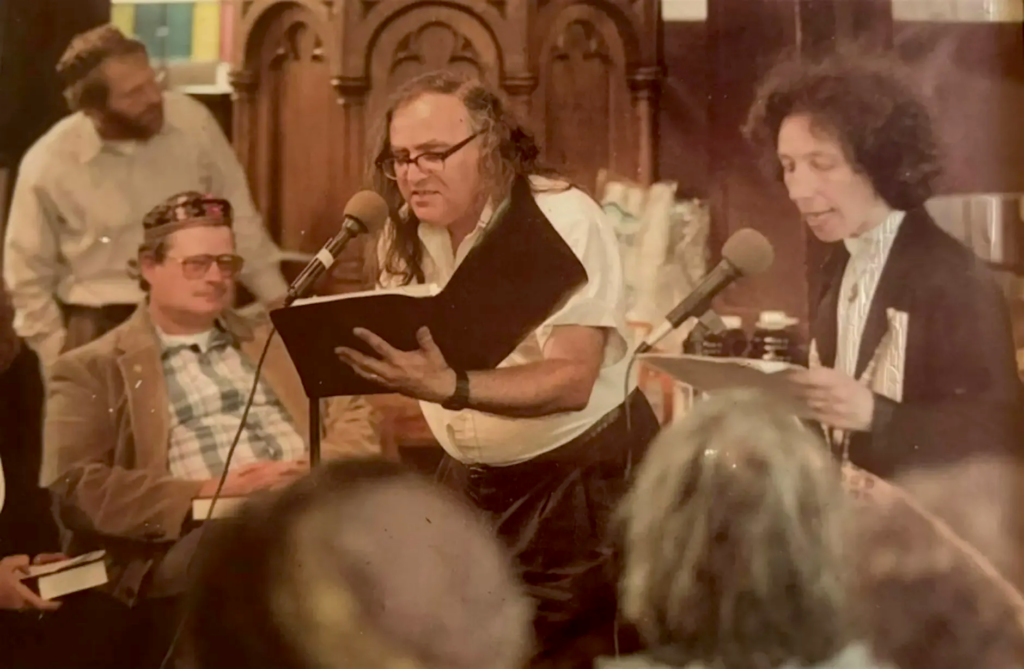
Jack Foley and Adelle Foley recite Damascus
KSC: Adelle Foley, your life partner for fifty-five years, was an inspiration and your poetry companion. How has the absence of Adelle shaped the later part of your life and literature?
JF: Adelle’s death was the worst experience of my life. Nina Serrano says I wept for a year afterwards. She is probably right. I experienced what I called “melt downs”: suddenly I would begin to weep. At such moments, I could “do” nothing. I saw Adelle through her death. She was brave and intelligent throughout. I was with her at the moment she died. I could feel her hand go cold. It was as wrenching an experience as one can imagine. I think that grief might be defined as the simultaneous presence and absence of the loved. She is present because you are thinking about her all the time and the things around you constantly remind you of her. She is absent because she is gone. I spoke to her when she was in her coffin; I spoke to her in what I wrote and which finally became Grief Songs. The intensity of the grief lessens, but it never leaves you. You become, in the Biblical phrase, “a man of sorrow.” This doesn’t mean that you’re incapable of laughter or loving or anything like that. But you now experience these things as someone who has lived through a death. I have always been reasonably prolific but, oddly, I found myself writing more and perhaps better than ever before after Adelle died. Whitman has a wonderful phrase in “When Lilacs Last in the Dooryard Bloomed”: “Death’s outlet song of Life.” I think I experienced something like that. My next book will be called Creative Death. It has a publisher. This is the title poem:
I am considering calling a book
Creative Death
for I know that oranges don’t grow in the sea
and there is no love in Seville.
I do not mean my own death
but the death of others near me
deaths which tear me apart
but which I survive
These are deaths
that allow for growth and transcendence
the dark figure in the shadows
emerging suddenly
with a lamp.
Cessation of breath
/ to breathing:
Death’s shaping hand
on mine.
I should add that, in the midst of my sorrow, I was very fortunate to have met Sangye Land.
KSC: Please share your experiences of writing Grief Songs.
JF: The experience of writing Grief Songs is the same as the experience of reading Grief Songs. It is not a book “about,” it is a book “during”––more like a diary than like a distanced account. It is a book of tears. If I read it now, I weep again as I wept when I wrote it. I think the tears are in the words.
KSC: You have written several books on poetry, story, and criticism. If you were to recommend a few to your readers, what would they be? And where to find them?
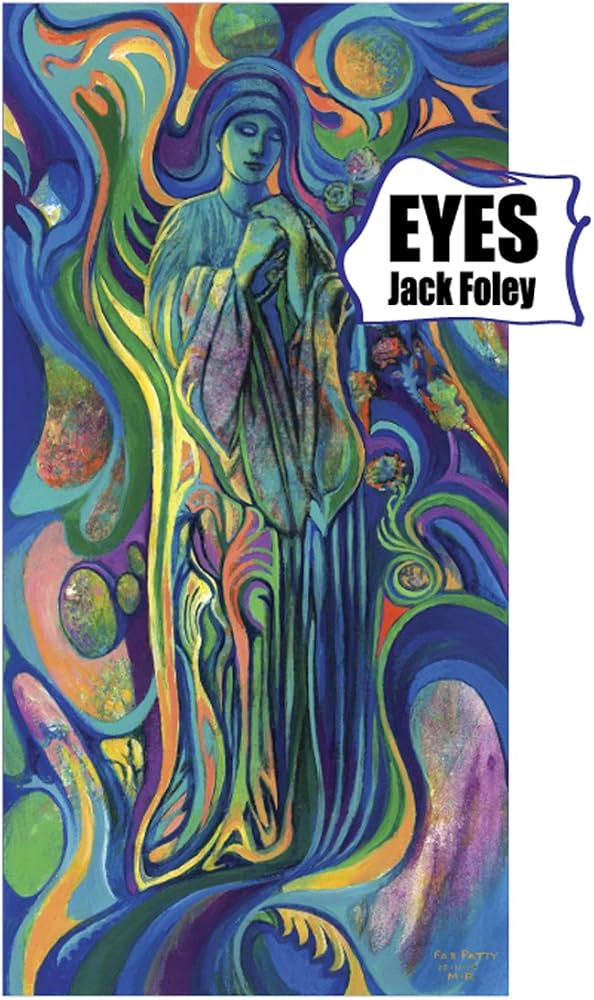
JF: EYES, my selected poems, was published in 2013, so, while it goes back a ways, it lacks things written in the past nine years. Since I’m a relatively chameleonic poet, a lot has happened in those nine years.
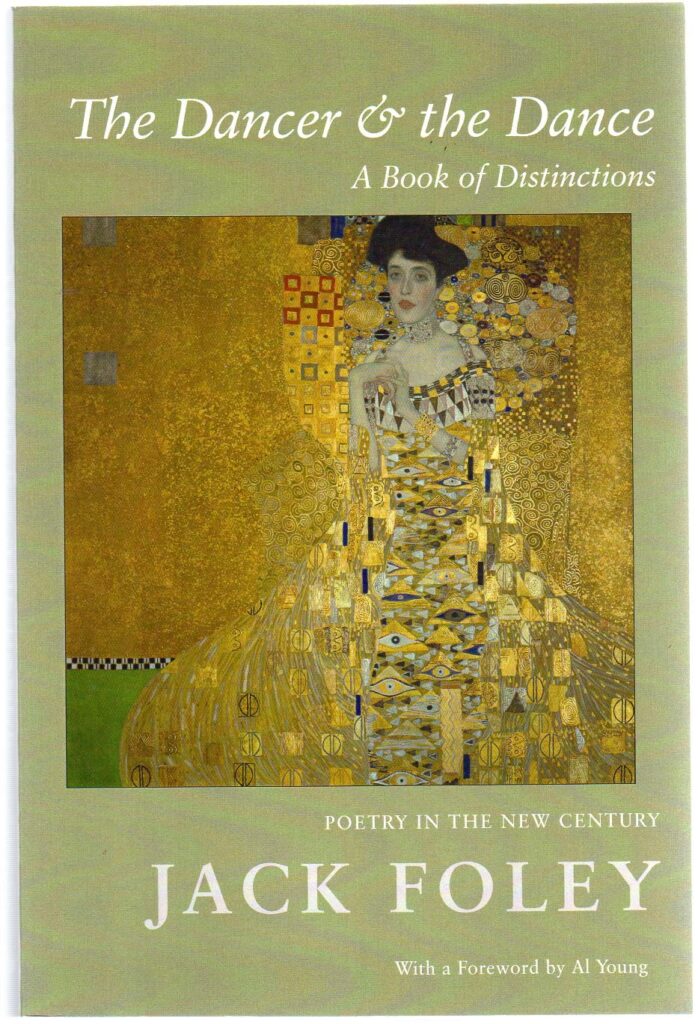
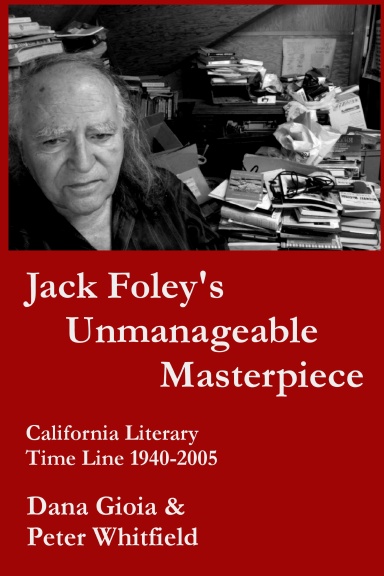
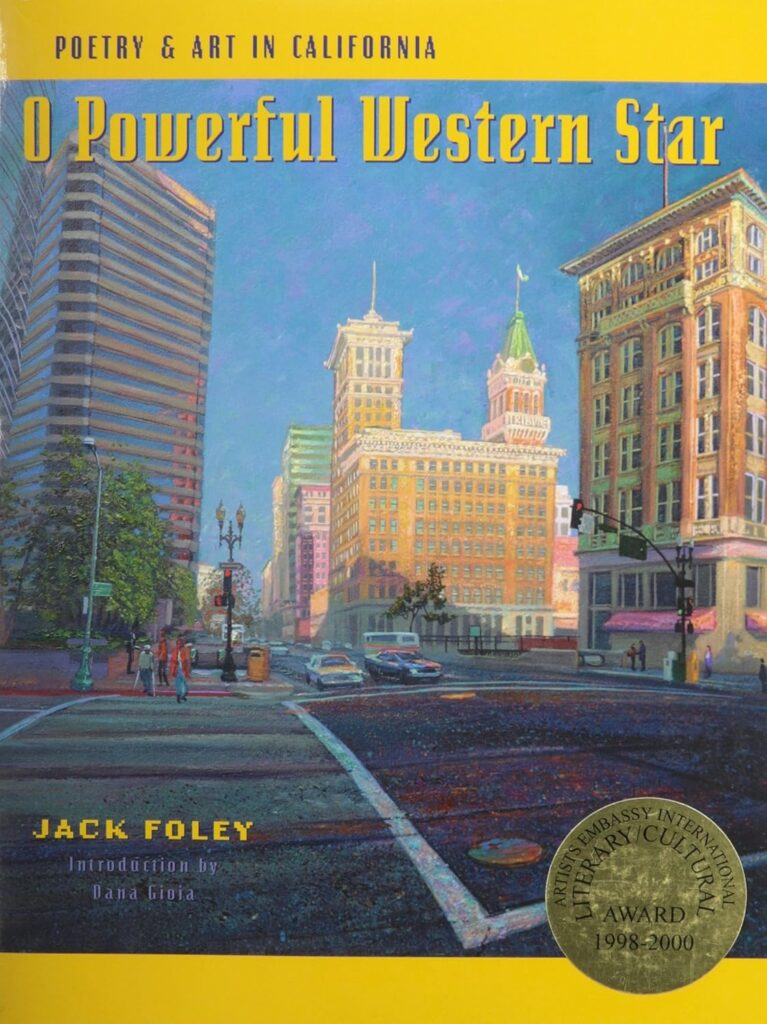
I have two companion books of criticism, O Powerful Western Star and Foley’s Books, published together in 2000––quite a while ago. O Powerful Western Star has an introduction by Dana Gioia and an accompanying CD. It is, I believe, the only book of criticism which includes a CD on which the author and his wife perform some of the pieces in the book. The Dancer and the Dance, another book of essays, was published in 2008 and has an introduction by Al Young. Visions & Affiliations: A California Literary Time Line—Poets & Poetry 1940-2005 was published in 2011. It’s a two-volume, 1300-page “chronoencyclopedia” which spawned a book about itself: Jack Foley’s Unmanageable Masterpiece. The latter was edited by Dana Gioia and Peter Whitfield. Dana Gioia writes: “Some…considered the elaborate time-line the first adequate account of California’s complex and contradictory literary life. Others recognized Foley’s radical innovation in changing how literary history could be written. A few even considered these strange and sprawling yet compulsively readable tomes an oddball masterpiece.”
Poetry: Adrift (1993); Exiles (1996); New Poetry from California: Dead / Requiem, a collaboration with Iván Argüelles (1998); Life (2014); Riverrun (2016); Grief Songs (2017); When Sleep Comes: Shillelagh Songs (2019).
The Tiger and Other Tales, a book of stories plus two short plays, came out in 2016.
My most recent publications are the companion volumes, The Light of Evening (title from Yeats) and “A Backward Glance O’er Travel’d Roads” (title from Whitman), both of which appeared in 2021. Evening is a brief autobiography, the story of the events of my life. Backward is a psychobiography, the story, as Wordsworth put it, of “the growth of a poet’s mind.”
These books should be available through Amazon or Abebooks.com or even EBay.
KSC: In 2021 you received KM Anthru International Literary Award for comprehensive literary contribution in India. How do you feel about that?
JF: I feel great about that. I was deeply honored. I said in my acceptance speech,
An award like this is breathtaking and sweet and tells me that someone was there, that the effort was worth it, that I was right when I chose to become a poet. Deep thanks to my brother in the art, Shajil Anthru, and to his late father. Long live LITTERATEUR RW. May it see the changes of which it dreams.
KSC: Have you ever been to India? Or had exposure to Indian culture?
JF: Unfortunately, I have never been to India. Nor is my knowledge of Indian culture very deep. I hope there is time to rectify that! My connection to LITTERATEUR RW was strictly through Facebook.
KSC: What are you writing next?
JF: I’m working on a new book of poetry tentatively called Another Circle of Life. My father was a tap dancer in vaudeville and musical comedy and I’ve written poems about those things. I may include a section called VOICE OF THE CITY, a perhaps false etymology of “vaudeville”: voix de ville. There will be much else as well.
KSC: What do you like to do when you are not writing and working?
JF: Talk with Sangye. Read. Have lunch with friends. Experience acupuncture and chiropractic. Watch movies (at home). Listen to music. Play solitaire (as my father did nightly). Sleep. I love to eat and enjoy ordering from SHEF online. I also enjoy writing song lyrics and working with composers Warren Wechsler and Tony Perez. Tony has a band that really rocks.
KSC: How do you connect with the rest of the world?
JF: Since the pandemic, I am far less outgoing than I used to be. My KPFA radio show, which I’ve been doing since 1988, is definitely a way of connecting with the rest of the world and is something I still very much enjoy doing. I eat lunch out once a week, almost always Vietnamese. I often have a companion, a friend. My acupuncturist and my chiropractor have become friends. I’m in constant contact with people on Facebook. I don’t feel isolated or lonely. I’m rather busy.
KSC: If you would like to change one thing about the world, what would that be?
JF: More compassion, more compassion, more compassion. Sangye is Buddhist so there is awareness of compassion there, but it’s also in Christianity. You can find it when Jesus offers to redeem the world through his own suffering. “Take me.” These are all stories, but they are healing, redemptive stories. We need more of them.
“An Introduction to Arab Poetics” by Adonis, presented by Jack Foley
KSC: Please share your favorite poem from any of your books.
JF: I don’t have a favorite poem. My poems are as disparate as my mind and have different strengths and weaknesses. (Cf. “What if there is no best?”) In the following poem, however, I saw myself as speaking to my readers and to the young:
In his great poem, “Out of the Cradle Endlessly Rocking” (1859), Walt Whitman constantly seeks a name for the kind of language he has invented for his complex, multi-voiced, multi- selved poem, resonating with echoes from the Bible (particularly the Psalms), from the highly theatrical opera of his day—the notion of the “aria” is central to the piece—even from the world of the newspaper, which was one of the places in which Whitman developed his understanding of writing. The term he chooses for this language, which is alive with the notion of performance, is not verse or poetry or prose or prose poetry—the term “free verse” was not available to him— but song. This notion of song was a redefinition of the possibilities of language in a specifically American context. In his extraordinary essay, “Projective Verse” (1950), Charles Olson extends Whitman’s insights into techniques partially gleaned from the French Symbolist movement, in which the silence and whiteness of the page is not neutral but an active element in the meaning of what the poet intends. In addition, breath—the breathing of syllables—becomes a central issue in the enunciation of the work. Together, Whitman and Olson—with, no doubt, some help from William Carlos Williams, among others—give living poets, and particularly American poets, a medium in which they can find their own erratic, imaginative way.
WHITMAN’S “OUT OF THE CRADLE ENDLESSLY ROCKING”
(EXPOESIS)
I don’t think there is another poem
More unique
And, simultaneously,
More representative of
What we may call the American spirit
Than this amazing
Presentation of the making of a poet
Of the transformation of anyone
From childhood to a condition of knowledge
How do we enter the world in a deep way
It is an aria, a performance
Something Whitman saw in the opera houses,
It is a multi-voiced, multi-selved poem in which
All sorts of styles and “voices” are brought together
(Including the hissing voice of the old crone, the sea, and the voice of the bird, “my dusky demon and brother,” “the lone singer wonderful”)
It is a poem about family (the he-bird, the she-bird)
It is a poem about the stunning fact of Death the Opener
And the great representation of the sea (Melville)
(The sea is the openness of consciousness)
It is a nature poem
In which the “outsetting bard” merges with what he sees
It includes Quakers (“Ninth-month midnight”)
And Native Americans (“Paumanok”)
It is Whitman giving himself over to the sheer possibilities of music
As world becomes word (“translating”)
It is an act of marvelous empathy and compassion in the literal sense, “feeling with”
It is a poem about the body and its transformation
Even as Whitman speaks of the soul
It is a poem in which the lorn bird and the transforming boy
Move us to what Wallace Stevens called
A new representation of reality.
This, camerados, is the great mythic moment of American letters
And it takes place not at a desk but outside,
Not as writing but as brilliant spontaneous unexpected utterance.
It ushers in (under the magical multivalent moon, in the presence of the vast, talkative sea)
Nothing less than the world as song.
KSC: What do you think of Life and Legends?
JF: Ralph Angel, Willis Barnstone, Robert Pinsky, David Mason, Christopher Merrill, James Ragan, Charles Harper Webb, William Logan, Joseph Bottum, Catharine Savage Brosman, Timothy Murphy, Dick Davis, Frederick Turner, Wendy Videlock, Rhina Espaillat, Jack Foley, Gail White, Richard Wakefield, Marilyn Taylor, Satyapal Anand, Nasseer Ahmed Nasir, Kedarnath Singh, Vishwanath Prasad Tiwari, Sarojini Sahoo, Tabish Khair and others. And others, indeed. That’s exactly the kind of open-minded, expansive magazine that I love. Look at the range of them. As with all fine magazines, you know some of the contributors and the others shine out as people to explore.
25. How would you like the world to remember Jack Foley?
JF: As a good poet and as someone who changed people’s minds in certain respects. Someone who said to himself and to others what the statue of Apollo said to Rilke in 1908: Du mußt dein Leben ändern / You must change your life.
Harvest Moon
the man looks out
in the difficult moonlight
in the darkness
of as complex historical
moment
the huge moon
delivering nothing but
enigma
the shadows and lights
uncertain in their meaning
he may be frightened
or perhaps weary
(he is old!)
he looks at us
so much of his life
in his face
what else matters?
the dark tree
the moon tonight
the color of blood
and the puzzle
of a man alone
with whatever thoughts
this moonlight brings

Kalpna Singh-Chitins is a poet, writer, filmmaker and Editor-in-Chief of Life and Legends.
