
Everything in Life is Resurrection: A Book Review by Tiffany Troy
Everything in Life is Resurrection (TCU Press, 2025), a Poetry Collection by Cyrus Cassells
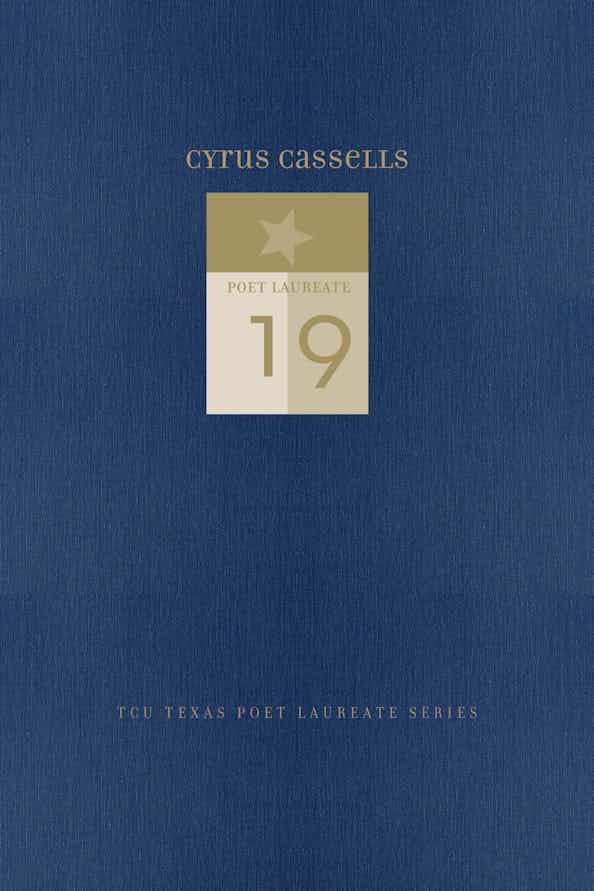
Everything in Life is Resurrection, like Cyrus Cassells’s poetry, subverts the reader’s expectation by beginning in reverse chronological order. It traces the trajectory of Cassells’s collections from The World That the Shooter Left Us (2022) and ends with The Mud Actor (1982), over a period of forty years.
The opening poem, “The World that the Shooter Left Us,” highlights Stand Your Ground laws, which allow the gun owner the right to use deadly force without the need to retreat: “Beware, be clear: the brown man, / The able lawyer, the paterfamilias, / Never makes it out of the poem alive.” In biting and righteous fashion, the poem’s speaker points out the “blunt, vitriolic white man’s / Unnecessary weapon/ And the ruse of self-defense” and insists on focusing our listening to: “Don’t interrupt the sorrow/ A woman croons.” Theatrics (“Ladies and gentleman,” “Senoritas Veracity and Sanity”) connect our “ailing country’s fast-galloping infamy/” to Goya’s “unflinching ‘Black Paintings,’” much as Cassells’s lineage from a family of civil rights activists and as a descendent of Thomas Jefferson’s “slave-wife” Sally Hemmings is linked to a Chilean mother grieving for her disappeared musician son: “Forever mourning,” “Forever swaying/ To your unforgettable woodwind.” Persona poems like “Icebox: II. Those ‘Return to Senders’ Children’” convey the dehumanization of the immigrant children who were detained.
In contrast with the fury of the Shooter poems, More Than Watchmen at Daybreak and The Gospel According to Wild Indigo are quiet, filled with the devotional of kyrie eleison among the “the Benedictines’ elating valley,” the way Cassells brings to life “Mary, the fearless, intent listener/ Forever bending to gauge/ The tenor of her small son’s cough.” That love of a mother for a child, notwithstanding intense grief (for Mother Mary) and the trauma of slavery (for African-Americans) is depicted with a candor and beauty in “X. The White Iris Beautifies Me.” In it, Cassells re-frames, as he does, the stand-your-ground laws, as provocation rather than self-defense, as he calls for freedom through faith in beauty and the express denial of the whiteness that demeans slaves and the descendants of slaves: “not the white of hard-won cotton,/ or of pitiless snow–/ I’ve found a whiteness that gives me its glory… it blesses me, and I become/ more than a brand… I swear, / she will never be shoeless/ in January snow./ Bold Iris, / she will never fear sale/ or the bottom of the sea.”
Cassells’s poems often land on this type of hard-earned epiphany, in the aftermath of surviving unspeakable tragedies. Rather than resorting to generalities, Cassells describes the siren call of evil with the aplomb of his theater background, and even the most solemn Benedictine valleys are blessed (with a wink), as when he adopts various guises (“Watch-me-everyone Sirius”) across cities and sites (lazaretto, Holocaust), drawing light even as he accords historical tragedies their due weight. Poetry, then, for Cassells is perhaps like a painter’s capturing of “The pull, the rose light/ of home” which “is unkillable” even as the “lone, itinerant survivor” “climbed out of a corpse-filled/ breaksprit ravine.”
In “Auschwitz, All Hallows,” Cassells writes: “let the pianissimo/ of your truest whispering/ (vivid as the crunched frost/ of a forced march)/ become a slow blossoming, / ever-voluble hearth–/ revealing to us/ (the baffled, the irresolute, / the war-torn, the living)/ more of the fire/ and attar of what it means/ to be human.” The human—deprived of his humanity, becomes in Cassells’s lyrical retelling—no longer voiceless but powerful in its alternate vision of whiteness (“The White Iris Beautifies Me”), and champions resilience (in the survival and witnesses of atrocities) in lieu of a deep despair, even while turning our gaze to the gallows and plantation fields.
Cassells’s collections are thematically disparate, though the beautiful (the making beautiful as the act of poetry) and the political is always inextricably intertwined. Ellen Hinsey, who has written the introduction, likens Cassells’s poetry of “love between men with an unmatched beauty, complexity, and restraint that is reminiscent of classical literature.” I admire particularly Cassells’s use of epithets and unflinching embrace of romanticism. Through the masks of Cyrus (Sirius, “the mud actor”), Cassells adds a layer of his identity and humor. Cassells turns our gaze to the divine, in the form of Platonic and romantic love: “Poet, lodestar,/ lover of men–I am love! I am nature! –/ is it only in genial dreams/ that freedom lives? / Is it real/ the road to paradise?” That freedom, in the pursuit of love between men and men focuses on the duality of humanity: in socioeconomic power and in theatrics as a performance of such an inversion. In that sense, in poetry, Cassells focuses not on the stoicism of the Benedictine monks or the peace of the cypresses but on the following, which can be interpreted as his ars poetica: “More than peace and cypresses, emboldened hares at the field’s edge,/ Father, I love / gallantry, tenacity, the sanguine/ heart before the ledge:/ the artist questing and failing–/ the feet of bested Icarus/ plunging into the sea’s crest”. “We love the morning man/ saint of the neglected, / neighbor blessing the esplanade/ …/ to affirm we are all/ bishops and kings, / beggars and stewards –/ For us, in our ardor, / there’s only one sill, / one city.” This reflects the well-traveled poet’s “endless wanderlust: / dervish” as much for a place as the beautiful and revealed Signor where the Beloved is not a muse but a lover as “the kiln-blaze/ in my body, / the turning heaven// beautiful Signor.”
“Beneath the systole and diastole of a starry night,” Everything in Life is Resurrection is a retrospective of Cassells’s answers to the dare that those in power pose to him: “How could they dare to believe/ You’re someone sacred?”
_____
Tiffany Troy is the author of Dominus (BlazeVOX [books]) and the chapbook When Ilium Burns (Bottlecap Press). She translated Catalina Vergara’s diamonds & rust (Toad Press International Chapbook Series). She is Managing Editor at Tupelo Quarterly, Associate Editor of Tupelo Press, Book Review Co-Editor at The Los Angeles Review, and Co-Editor of Matter.