
A Mouth Full of Salt: A Book Review by Candice Louisa Daquin
A Mouth Full of Salt, a Novel by Reem Gaafar (Invisible Publishing, 2025)
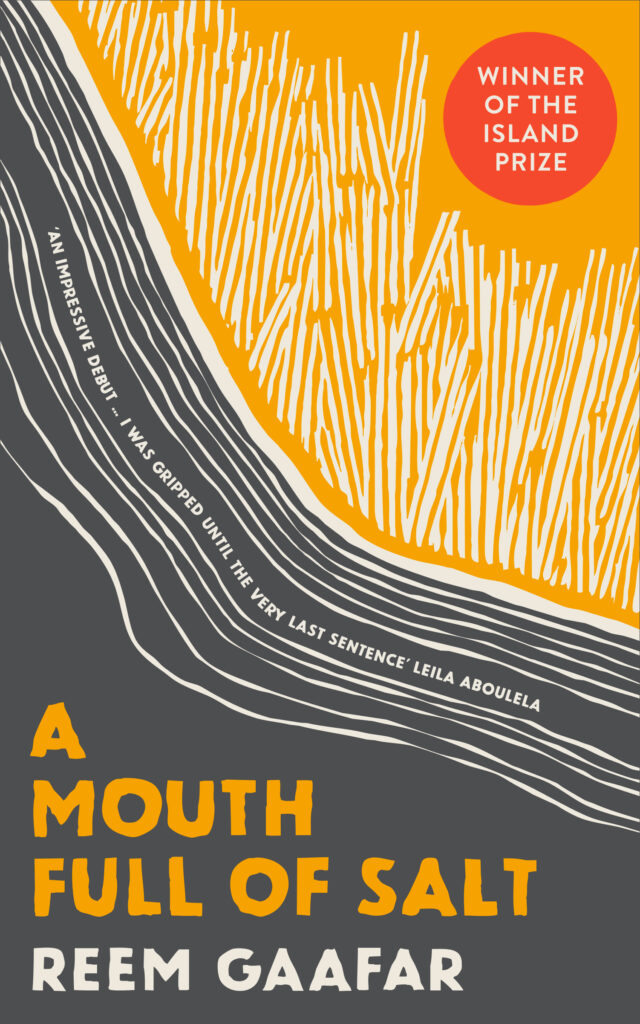
Gaafar’s debut novel begins with the search for a missing boy in the village, presumed drowned in the Nile. Having spent much time by the Nile as a child of an Egyptian mother, A Mouth Full of Salt appealed from the onset, for its portrayal of a neglected part of the world by writers, whose complex history is poorly understood.
Taking us to Sudan, we are first introduced to this novel through the eyes of Fatima, who observes her community’s response to tragedy; poignantly illustrating the impact of a missing boy on the whole village. From the outset, the novel reflects on the cultural practices surrounding death and mourning in Sudan, emphasizing the significance of burial rituals and highlighting the emotional toll experienced with acute loss, within this specific culture. Fatima’s observations, wrought through narrative and description, evoke the enduring contrast between communal mourning and the personal struggles of individuals.
Told through the lens of three women’s experiences, separately and interconnectedly, we learn of how ‘significance’ as we understand it, shifts by culture and perspective. We come to see, through Sulafa, the mother of the drowned child, that prophecy and superstition often replaces reason when there is no understanding of what happened: “There was no logical explanation; It had to be supernatural.”
Childbirth in a traditional setting is also explored, when the character Sara give birth. Nearly dying there is a visceral examination of process, set against traditional methods. Perhaps with the author having extensive scientific and medical training, this is the perfect opportunity to discuss, without being insensitive to cultural mores, the impact and danger of giving birth. Set against this, Sara’s mother-in-law displays cruelty during the delivery process, that shows the limitations and frustrations of two styles of living.
Luck and bad luck are looked at, where Sulafa, who is infertile, is banned from being involved in Sara’s birth or afterward. Sulafa’s situation isn’t sympathized with, as much as viewed with suspicion and this is a powerful statement about superstitions surrounding childbirth and fertility. When Sara dies, the community blames modern medicine. The vivid descriptions of death are both necessary and haunting in their realism and poetry:
“She didn’t look like she was sleeping peacefully. She looked like she was screaming.”
The aftermath of the delivery reveals the harsh realities of life and death in the village and the cyclical nature of life, so immediate in this setting. Sulafa has experienced multiple miscarriages and carries shame and anger projected from her family. This causes her husband to be abusive, and again, the novel illustrates the societal pressures on women to bear children and the consequences of failure. Hence the cycle of grief and loss experienced by the characters in this novel are borne out, through the cycle of life and death as an inescapable part of the characters’ existence.
When Nyamakeem arrives, as a stranger to the village, we learn more of her journey from the South to the North, which highlights cultural tensions, underscoring societal norms regarding marriage and lineage. Nyamakeem’s experience as a Southern woman married to an Arab man reflects broader themes of belonging, identity, and the impact of cultural heritage, including the belief that maintaining pure Arab lineage is necessary. The novel reveals dark family secrets and the consequences of past actions that haunt the characters. There is a perpetuated cycle of violence and discrimination, highlighted through the characters’ experiences and choices, ultimately highlighting the complexities of belonging in a society that categorizes individuals based on race and lineage.
The core of the novel, questions the morality of societal expectations and its impact on individual choices and identities, set alongside the three main characters journeys of self-discovery, while illustrating how personal experiences of grief and betrayal lead to deeper self-awareness and understanding of one’s place in the world.
Reem Gaafar’s first novel, A Mouth Full of Salt, won the Island Prize for literature in 2023 and brings for the foreign reader, an invaluable insight into Sudanese culture, alongside difficult truths about the history of two countries division. Those injustices, set against a post-colonial history, teach us about the clash between science and tradition, the inequities in women’s health care, the enduring permanency and pain of motherhood and the ultimate power of education. This is about tribalism, stated plainly and with great love and respect for a rich culture, and its myriad complexities. With strong female characters, and a deepening relating of kinship and what it means to belong, we earn a sense of place, and community, within the folds of A Mouth Full of Salt.
_____
Candice Louisa Daquin is an editor and trauma-therapist. Daquin is Senior Editor with Indie Blu(e) Publishing, Editor with Raw Earth Ink and Queer Ink and editor with Life and Legends, Writers Resist and Tint Journal.
